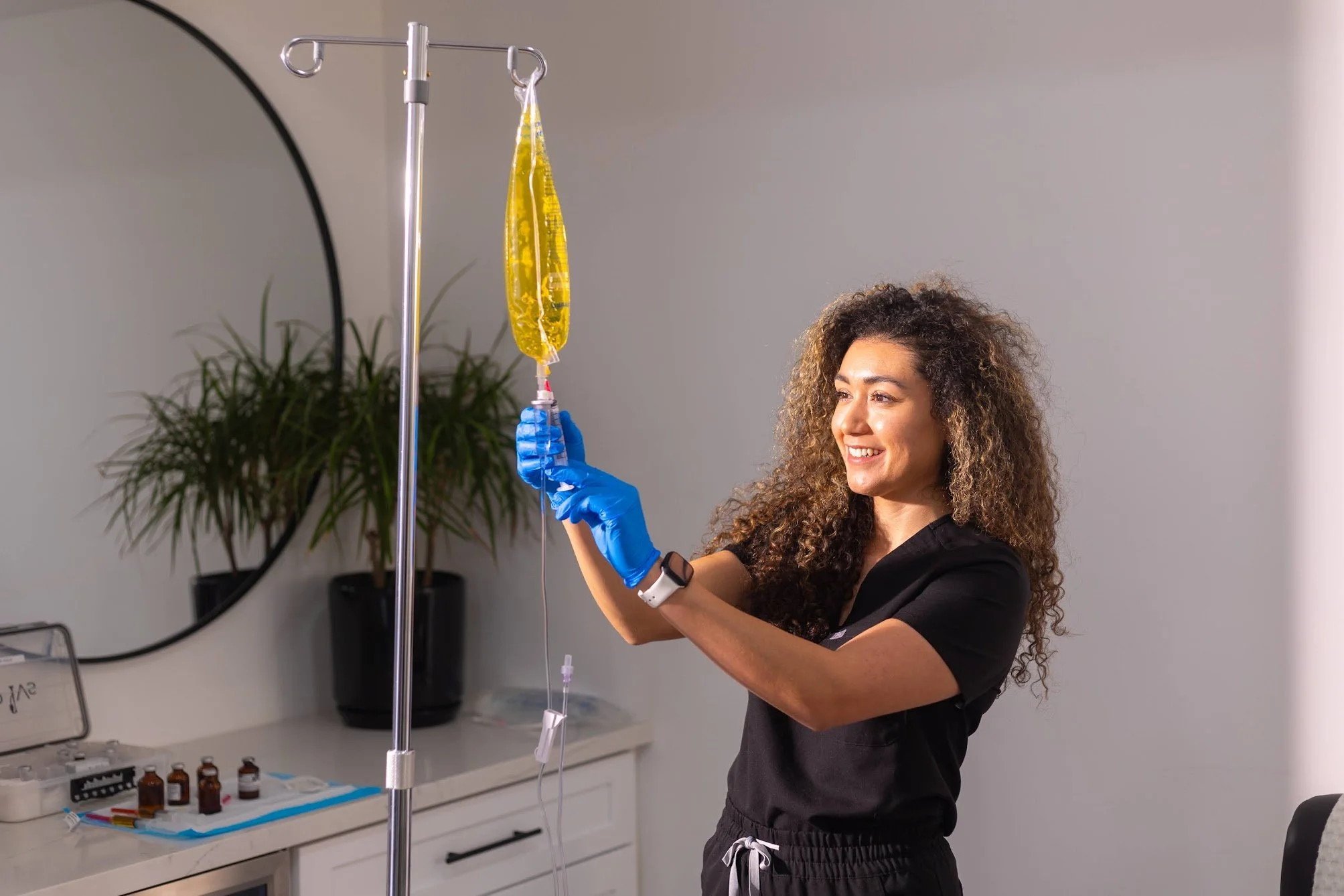
IV Therapy for Fertility: How Nutrient Support Can Improve Your Fertility Journey
Trying to conceive can be an emotional and complex experience. Whether you're pursuing pregnancy naturally or through IVF and other fertility treatments, it's normal to look for ways to optimize your overall health. While IV therapy for fertility isn't a replacement for medical care, it may help support your body by addressing nutrient deficiencies, hydration, and overall wellness—all of which play important roles in reproductive health.
In this article, we'll explore how IV therapy may complement your fertility plan, the nutrients commonly included in an IV infusion, and what current research says about its potential benefits.
Read More
Pregnancy and IV Therapy: A Comprehensive Guide
Pregnancy is a journey filled with joy, anticipation, and unique challenges. Among these challenges, morning sickness and hydration management stand out, especially in the first trimester. IV therapy, a burgeoning trend in prenatal care, offers an innovative solution to these concerns, ensuring that pregnant women maintain optimal health. This blog post delves into how IV therapy benefits expecting mothers, focusing on hydration, electrolyte balance, and alleviating morning sickness symptoms.
Read More
IV Intralipid Therapy for Fertility
Intralipid, a 20% fat emulsion which is comprised of soybean oil, egg phospholipids, and glycerine, was initially used as a form of IV nutrition. Since this discovery, it has been implemented in several protocols to help immunosuppress the body and reduce the expression and activity of natural killer cells, a type of white blood cell which can interfere with the transfer and implantation process. Intralipid has been touted as a less expensive, safer, and equivalent therapy to more expensive treatments.
Read More
Can Red Light Therapy Help Improve My Fertility?
A recent advance in fertility therapy includes low level laser light therapy, or LLLT (also called photobiomodulation). This has been explored in several studies to analyze the impact at improving fertility outcomes by performing targeted treatments on the area of interest (testes areas in males, lower abdominal area to cover the ovaries in females). This article will “shed some light” (see what we did there?) on the science behind these claims and provide a rationale in why we are including them as a therapeutic service with ASAP IVs.
Read More
Does Vitamin D Help with Fertility?
Guidelines suggest a daily Vitamin D intake of 400-2000 IU in order to maintain 25(OH)D concentrations of 50-75nmol/L. We recommend a daily Vitamin D intake of 1000-2000 IU to maintain a serum level in this ideal range. If an intramuscular injection is preferred over daily supplement injection (or a quick catch-up period is desired), then a once monthly injection of 50-100k IU is performed every 4 weeks. This recommendation is based on studies showing that an injection of 100k IU peaks at 4 weeks, and then begins to taper (Gorman 2017).
Read More
Can NAD+ Help With Infertility?
As we age, egg quality decreases in step with declining levels of NAD+. Proposed benefits of NAD+ supplementation (often through the metabolic precursor nicotinamide mononucleotide or NMN) include improving egg quality, restoring fertility potential, and rescue reproductive capability.
Read More
What Supplements or Vitamins Should I Take for IVF?
IVF utilizes medication to increase the number of mature eggs that are available to be fertilized each month. These eggs are extracted and then combined with sperm in a lab to hopefully produce embryos, which are then frozen for later use or transferred to a woman’s uterus a short time after. While a higher number of eggs able to be retrieved is favorable, quality of the eggs is very critical for successful creation of viable embryos. It is important to be aggressive in maximizing the quality of eggs when they are needed, both in a natural conception environment, and more especially for IVF. Egg quality is difficulty to change as a woman’s age increases, though there is plenty of data to support various lifestyle changes for improvements in egg quality. One of these lifestyle changes that can be beneficial is the addition of certain supplements to the diet.
Read More
Which Vitamins Should I Take During Pregnancy?
Pregnancy is a significant time of growth and development and maintaining good health and nutrition throughout is essential to nourish both yourself and your growing baby.
Read More
IVs for Pregnancy and Morning Sickness
Pregnancy related nausea and vomiting is an entirely normal symptom of pregnancy, and unfortunately affects a large majority of pregnant women. Many of our clients have found our IVs extremely helpful for getting through significant episodes of pregnancy related nausea and vomiting, and here we explain why!
Read More